


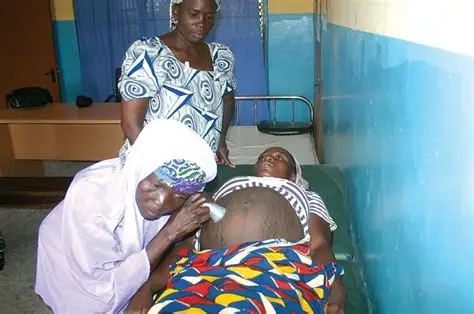
Experts and traditional leaders have called for the formal recognition, training and coordination of indigenous midwives, saying they can help address Nigeria’s maternal healthcare challenges.
The call was made during an X Space organised by the Resource Centre for Human Rights and Civic Education (CHRICED) on Friday as part of activities marking the 2026 World Indigenous Peoples Day.
According to a statement issued by Kolawole Omoniyi, Publicity Coordinator, World Indigenous Peoples Day 2026, Abuja, the discussion, themed “Celebrating Indigenous Midwives: Preserving Abuja Original Inhabitants Identity in a Changing World,” was organised in partnership with the University of Abuja and Abuja Original Inhabitant Organisations.
The statement said the speakers and participants examined the role of indigenous midwives in maternal healthcare, particularly in communities where formal health facilities are overstretched.
Speaking during the discussion, HRM Ayedoo Gloria Luka, professional nurse, medical practitioner and Queen of Kwali, said indigenous midwifery should not be abolished in the name of modernisation.
“We do not need to abolish indigenous midwifery. They should be formally recognised to fill the deficit of midwives in Nigeria,” she said.
Luka called for capacity building and stronger collaboration between indigenous midwives and formal healthcare institutions, particularly in identifying danger signs and making timely referrals.
“Many local women feel safe around indigenous midwives because of language and cultural familiarity. Their services are also cost-effective, and they complement government intervention where health facilities are overstretched,” she said.
READ ALSO: CHRICED, UniAbuja Set to Honour Abuja’s Indigenous Midwives, Cultural Heritage
She also called for the involvement of traditional rulers and other stakeholders in promoting safe motherhood, stressing the need to train indigenous midwives to understand their limits.
Prof. Matthew Sunday Dada, Director of the Centre for Indigenous Studies and Community Development, University of Abuja, urged government to support research into the gaps and challenges affecting indigenous midwifery.
Dada expressed concern over reports of professional health workers rejecting referrals from indigenous midwives.
“Proper engagement and adequate coordination would salvage the situation instead of rejection,” he said, urging stakeholders to work together to improve maternal healthcare.
According to him, research would provide evidence for government to develop practical policies that could guide indigenous midwifery, preserve traditional knowledge and ensure its transfer to future generations.
Also speaking, Hon. Dr. Rifkatu Adamu Chidawa, retired educator and former Commissioner for Tourism in Niger State, described indigenous midwifery as an important part of Nigeria’s cultural heritage.
“We cannot do without our cultural practices and heritage. Indigenous midwifery has come to stay and should be embraced with adequate training and skills acquisition,” she said.
Chidawa called for proper documentation and a comprehensive database of indigenous midwives to establish their numbers, locations and other demographic information.
She also urged stakeholders to create awareness about their activities and clearly define the limits of their practice.
READ ALSO: Childbirth Complications: Hidden Dangers Facing Women in Kano
The X Space attracted participants from across the country who interacted with the speakers and broadly agreed on the role indigenous midwives can play in complementing formal healthcare services and addressing Nigeria’s maternal and child mortality challenges.
The event is part of activities leading to the World Indigenous Peoples Day 2026 celebration scheduled for Monday, August 10, at 10:00 a.m. at the University of Abuja, New Site.
The celebration is organised by CHRICED in partnership with the University of Abuja and Abuja Original Inhabitant Organisations, with support from the MacArthur Foundation.