


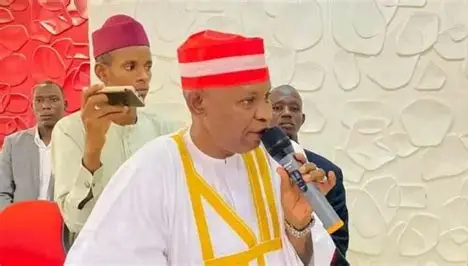
When Governor Abba Kabir Yusuf defected from the New Nigeria People’s Party (NNPP) to the All Progressives Congress (APC) in February 2026, the grand reception at Sani Abacha Stadium was presented as a political triumph.
Vice President Kashim Shettima and other APC leaders described the move as a “game-changer” for Kano politics.
However, beneath the celebratory atmosphere lies growing unease. Former APC stalwarts and members of the Kwankwasiyya movement now find themselves under one political umbrella, operating under a controversial 60/40 power-sharing formula that grants Yusuf’s bloc majority control of the party structure in the state.
READ ALSO: Defection Drama: Kwankwaso Alleges Kano Officials Pressured To Endorse Gov.Yusuf’s Exit
The 60/40 Formula
At the formal reception, APC National Chairman, Prof. Nentawe Yilwatda, announced that Governor Yusuf and his supporters would control 60 per cent of the party’s leadership structure in Kano, while old APC members—including figures such as former National Chairman Abdullahi Umar Ganduje and Deputy Senate President Barau Jibrin—would hold the remaining 40 per cent.
According to Yilwatda, the arrangement follows party tradition, where sitting governors who defect are given significant control to ensure inclusiveness and stability.
While Yusuf’s camp considers the formula fair, many longstanding APC members view it as unsettling and inequitable.
Signs of Internal Strain
Tensions have already surfaced. A recent public altercation between Kano South Senator Abdulrahman Kawu Sumaila and House of Representatives member Alhassan Ado Doguwa exposed cracks within the party.
In a viral video, Doguwa rejected the 60/40 arrangement in his constituency, alleging attempts to sideline him politically. Senator Kawu responded sharply, further deepening the rift.
READ ALSO: Kwankwaso Demands Payback As Kano Assembly Backs Yusuf’s Defection Plan
In some local government areas, including Kano Municipal and Tudun Wada, parallel stakeholders’ meetings were reportedly held by the two factions—an indication that trust remains fragile.
“We Are Learning to Blend”
Despite the visible strain, members of Yusuf’s camp dismiss claims of division. Auwal Lawal Aranposu, Deputy Managing Director of the Kano State Roads and Traffic Agency (KAROTA), said the arrangement follows established APC tradition.
“Whenever a sitting governor defects, he is usually given 60 per cent of the party structure. There is nothing new,” he said, adding that internal disagreements are normal in large political parties and would be resolved over time.
However, attempts to reach the state APC chairman and secretary for comments were unsuccessful.
Meanwhile, some old APC leaders remain dissatisfied. A party chieftain in Dala Local Government, Alhaji Saidu Garba Dala, described the formula as unfair, particularly regarding local government allocations.
Despite holding 40 per cent of leadership positions, the faction reportedly controls only 14 of the 44 local government areas—an arrangement critics say reflects imbalance and top-down imposition.
“We fought for APC when it was tough. Now everything is being handed to newcomers. It feels unfair,” Dala said.
2027 Calculations
Yusuf’s defection has reshaped Kano’s political landscape. Several APC heavyweights, including Barau Jibrin and former governorship candidate Nasiru Yusuf Gawuna, stepped aside, effectively clearing the path for Yusuf ahead of the 2027 elections.
Political analyst Dr. Kabiru Sa’id Sufi described the tension as natural, noting that the two camps were long-time adversaries before merging.
“It will take time for them to understand each other and blend,” he said, adding that both sides must make concessions to maintain unity.
READ ALSO: Defection Saga: Kano Govt Issues Stern Warning Over Attacks On Kwankwaso
He warned that mismanagement of internal grievances could trigger fresh defections, especially given the continued influence of other political figures across parties.
“APC may have consolidated power in Kano, but if interests are not balanced, today’s alliance could become tomorrow’s crisis,” he cautioned.
For now, while APC leaders project unity, the real test will be whether the 60/40 formula fosters cohesion—or deepens divisions—as 2027 approaches.
Daily Trust