


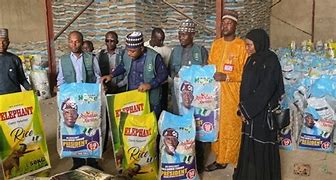
The Kano State Public Complaints and Anti-Corruption Commission (PCACC) has discovered 26 trailer loads of 50kg bags of rice, valued at over ₦1 billion, allegedly diverted from a palliative distribution program.
During a press briefing at the warehouse located on Ring Road in Kano, PCACC Chairman Muhyi Magaji Rimin Gado revealed that the operation was made possible through intelligence from concerned citizens.
“One person has been arrested in connection with this shameful act, and investigations are ongoing to apprehend other accomplices who are currently on the run,” Magaji announced.
READ ALSO: Kano Anti-Graft Commission Probes Kwankwaso, CoS Over Contract Scandal, Palliatives Diversion
The confiscated 16,800 bags of rice were reportedly meant for distribution as palliatives during the last Ramadan festival. Instead, they were diverted to a warehouse where they were being rebagged under different brand names for resale.
Magaji explained, “The rice, originally branded with the name of President Bola Ahmed Tinubu and marked ‘Not for Sale 50kg Ramadan Kareem,’ was being rebagged into other labels, including ‘Big Mama Rice Premium Quality’ and ‘Elephant Classic Parboiled 100.’”
He disclosed that 28 trailers, each carrying 600 bags of rice, were involved in the alleged diversion.
Magaji assured that the commission would report its findings to Governor Abba Kabir Yusuf for appropriate action.
He emphasized that the government would not tolerate such acts of corruption, particularly those targeting resources meant for the poor and vulnerable.
READ ALSO: Senator Barau Vows To Oversee Palliatives, Urges Support for Tinubu
“This is an unacceptable act, and we will ensure that those responsible are held accountable,” Magaji declared.
The discovery has sparked public outrage in Kano, where many residents have decried the diversion of palliatives intended to alleviate hardship.
The PCACC has pledged to continue its investigation to identify and prosecute all individuals involved, reiterating its commitment to curbing corruption and ensuring transparency in resource distribution.