


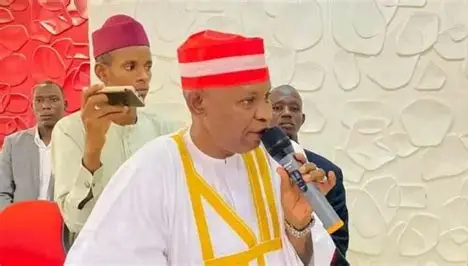
The Resource Centre for Human Rights and Civic Education (CHRICED) has urged the Kano State House of Assembly to use the 2026 budget to translate laws and allocations into lifesaving services, warning that persistent gaps in primary healthcare are costing mothers and children their lives.
Presenting a memorandum at the Assembly’s public hearing on the 2026 budget, CHRICED’s Executive Director, Dr. Ibrahim M. Zikirullahi, commended the Speaker, Rt. Hon. Jibril Isma’il Falgore, and the House leadership for what he described as an open-door policy that has strengthened citizen participation in governance.
He said such accessibility “deepens democracy and ensures that the voices of ordinary people are reflected in public policy.”
However, Dr. Zikirullahi noted that despite repeated budgetary allocations to health, education and social services, the reality on the ground, particularly in rural communities, remains grim. “Preventable deaths are still occurring,” he said, adding that these losses expose “deep cracks in our healthcare delivery system.”
He cited findings from CHRICED’s recent Service Availability and Readiness Assessment (SARA) conducted across 91 Primary Health Care facilities in 11 local government areas, which revealed serious deficits.
According to the assessment, many PHCs lack basic infrastructure such as reliable electricity, clean water and functional delivery rooms, while rural LGAs like Kibiya and Gwarzo recorded infrastructure readiness below 24 per cent, with low service utilisation to match.
“Nearly half of patients reported paying out-of-pocket at facilities that are supposed to provide basic services,” Dr. Zikirullahi said. “In some centres, essential medicines like Magnesium Sulfate were unavailable for an average of 15 days in a single month. These failures translate into unacceptably high maternal and child mortality risks.”
He reminded lawmakers that it has been two and a half years since the Kano State Free Maternal and Child Healthcare Law of 2023 was passed and assented to, yet implementation has not begun. “This does no honour to the Ninth Assembly that worked hard to pass the law, nor to the people of Kano State who stand to benefit from it,” he said.
While acknowledging initiatives such as the Maternal and Neonatal Mortality Reduction Innovation and Initiatives (MAMII) and the Sector-Wide Approach (SWAp), CHRICED maintained that the persistence of high mortality rates underscores the urgency of fully implementing the Free Maternal and Child Healthcare Law.
The Executive Director called on the Assembly to immediately operationalise the law by establishing the Free Maternal and Child Health Consultative Council as provided under the statute and by making dedicated budgetary provisions in the 2026 appropriation.
He also urged greater transparency around constituency projects, recommending consultations with constituents to identify priority needs and the adoption of a legal framework, similar to that of Lagos State, to regulate such projects.
On oversight, Dr. Zikirullahi stressed that lawmakers must ensure strict monitoring of budgetary allocations so that “every naira translates into improved services,” with outcomes tracked to guarantee real benefits for citizens.
He told lawmakers that their legacy would be measured not by the number of laws passed, but by their impact. “History will not judge this Assembly by the volume of legislation, but by the lives those laws saved,” he said. “The 2026 budget is an opportunity to choose life, dignity and accountability for the people of Kano State.”
According to him, CHRICED remains ready to work with the Assembly to ensure governance delivers tangible improvements in the quality of life for residents across the state.