By Kolawole Omoniyi
Residents and business owners in Durumi III, an indigenous community in the Federal Capital Territory (FCT), are counting heavy losses following another demolition exercise, despite the FCT Minister, Nyesom Wike, earlier promising to issue Certificates of Occupancy (CofOs) to indigenous communities on their ancestral lands.
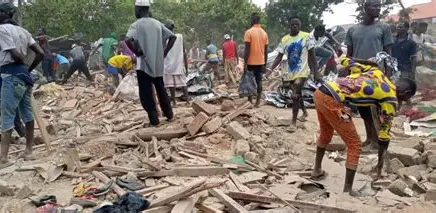
The latest demolition, which affected dozens of shops and businesses, has reignited concerns over land rights, due process, and the future of Abuja’s original inhabitants.
“I borrowed ₦5 million from Moniepoint to set up this business,” Oche Abdul, one affected trader lamented.
“Is selling now illegal? I lost 27 bags of rice during the demolition,” Aina another resident said.
Residents told Grassroots Parrot that the demolition was carried out on a Sunday morning while many community members were attending church services.
According to community leaders, about 35 shops were demolished, with losses running into millions of naira.
The affected residents said they were informed that the operation was intended to clear criminal hideouts. However, community members strongly disputed the claim, insisting that the area is peaceful and not known for criminal activities.
The Village Head of Durumi III, Bawa Iyah, condemned the exercise, alleging that officials initially informed residents that they were coming to rehabilitate roads before demolition activities began.
READ ALSO: Wike Vows To Continue Demolition Of Houses, Revoke Titles In Abuja
When Grassroot Parrot visited the area, officials of the Federal Capital Development Authority (FCDA) arrived to assess the affected site.
Although the officials declined to grant an interview, residents claimed discussions during the visit suggested that the agency did not directly authorize the demolition.
The FCT Police Command also distanced itself from the operation. Police spokesperson Josephine Adeh said that officers present merely provided security cover.
With both the FCDA and police denying responsibility, residents are left asking a critical question: Who ordered the demolition?
The latest incident is not the first demolition threat faced by Durumi III. Community leaders say disputes over land ownership and development pressures have persisted for more than two decades.
Beyond businesses and homes, the controversy has also cast uncertainty over education in the community. The only primary school in Durumi III has become entangled in competing ownership claims, with residents fearing that both the old and newly constructed school buildings could face demolition.
A new school structure, built by the current Abuja Municipal Area Council (AMAC) administration to reduce overcrowding, remains unused years after completion because it has not been formally handed over to school authorities.
The residents therefore called for proper consultation, compensation, and resettlement plans before any development project affecting indigenous communities is undertaken.
READ ALSO: Kano Gives Traders 24-Hours Quit Notice, Threatens Immediate Demolition
Their concerns come three months after Wike pledged to grant C of Os to indigenous residents to secure their ancestral lands. However, community leaders say they are yet to see any practical implementation of that promise.
Dr. Lasarus Nyeholo, the Secretary of the Garki Palace, argued that issuing new CofOs to indigenous communities would be difficult unless existing titles already allocated to developers in disputed areas are first reviewed or revoked.
As residents seek answers over the latest demolition, questions remain over land ownership, accountability, and the protection of indigenous communities in the nation’s capital.