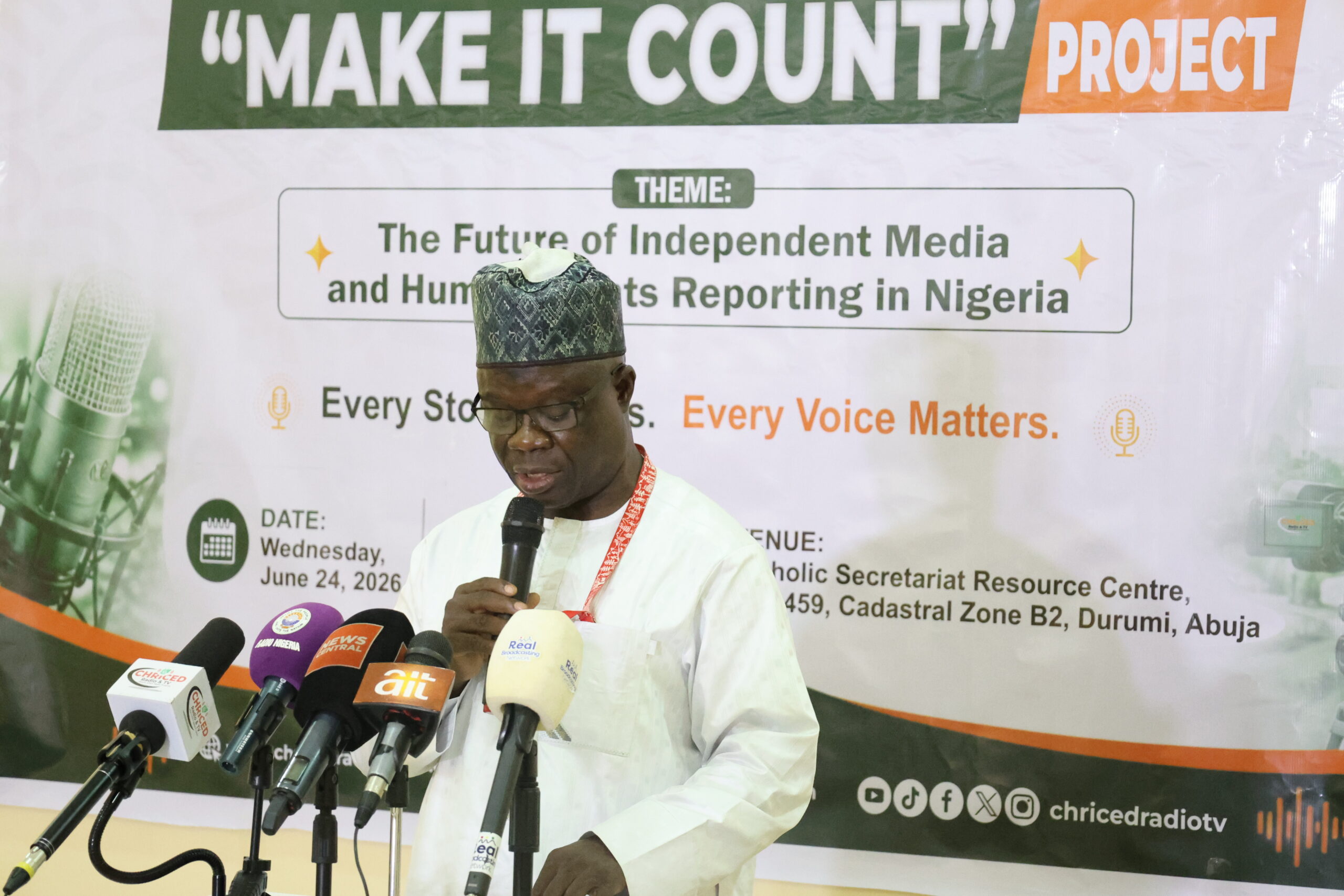
As concerns grow over the under-reporting of social injustice and human rights issues at the grassroots, CHRICED Radio and Television and its German partner, WELTFILME, on Wednesday unveiled the “Make It Count” project to empower citizen journalists and amplify community voices across Nigeria.
The project was unveiled at a stakeholders’ meeting themed, “The Future of Independent Media and Human Rights Reporting in Nigeria,” attended by media practitioners, civil society actors, development partners and government representatives.
Speaking at the event, the Executive Director of CHRICED, Dr. Ibrahim M. Zikirullahi, described the initiative as a movement aimed at ensuring that the voices of ordinary Nigerians are heard in the country’s democratic process.
“This project is more than a programme; it is a movement to strengthen independent media, amplify human rights reporting and ensure that the voices of ordinary Nigerians truly count in shaping the future of our democracy,” he said.
Zikirullahi lamented that journalists and civic actors increasingly face intimidation, while vulnerable communities continue to struggle to tell their stories.
According to him, the project will nurture a new generation of citizen reporters, empower community storytellers and support media organisations willing to hold power accountable.
“We will invest in training, technology and collaborative networks that enable journalists and civic actors to document abuses, expose corruption and highlight stories of resilience and hope,” he added.
Providing an overview of the initiative, WELTFILME Project Team Lead in Nigeria, Mrs. Julia Krojer, said the project seeks to strengthen digital television journalism, build professional media capacities and encourage sustainable collaboration among media organisations.
READ ALSO: Party Deregistration: Exercise Caution To Protect Democracy, CHRICED Tells INEC
She disclosed that participants would receive practical training in television journalism, peace journalism, camera work, editing and social media communication, while jointly producing about 90 media reports and programmes.
“The project creates opportunities for learning, exchange and innovation that contribute to a more vibrant and sustainable digital media ecosystem,” Krojer said.
Representing the Chairman of the Nigeria Union of Journalists, FCT Council, Comrade Grace Ike, Mr. Kenneth Olajide said ethical storytelling had become more important as Nigeria’s media landscape continues to evolve.
“The quality and integrity of our storytelling has never mattered more,” he said, pledging the union’s support for initiatives that advance human rights-focused journalism and strengthen independent media.
On his part, the keynote speaker, veteran journalist and labour activist, Owei Lakemfa, warned that press freedom in Nigeria faces serious threats from state and non-state actors.
He cited reports showing that Nigeria recorded 103 civic space violations in 2024, with journalists accounting for more than half of the victims.
Lakemfa also decried the poor welfare of journalists, noting that some media organisations owe workers salaries running into two years, a development he said encourages unethical practices in the profession.
He called for sustainable funding models for the media, stronger legal protections for journalists and the adoption of ethical frameworks to guide the use of artificial intelligence in journalism.
The Chairman of the National Human Rights Commission, Tony Ojukwu represented by the commission’s spokesperson, Mrs. Fatima Mohammed, commended CHRICED Radio and Television for introducing the initiative, describing it as a timely intervention that would promote accountability and human rights protection.
READ ALSO: June 12 Should Not Be A Festival Of Government Propaganda – CHRICED
The Chairman also observed that despite the disturbing cases of human rights abuses against journalists that have come to light, none of the victims had formally petitioned the commission for redress, urging affected journalists to take advantage of the commission’s mechanisms to seek justice.
Participants at the meeting also advocated stronger partnerships among media organisations, civil society groups and development partners to build an independent, resilient and people-centred media ecosystem in Nigeria.