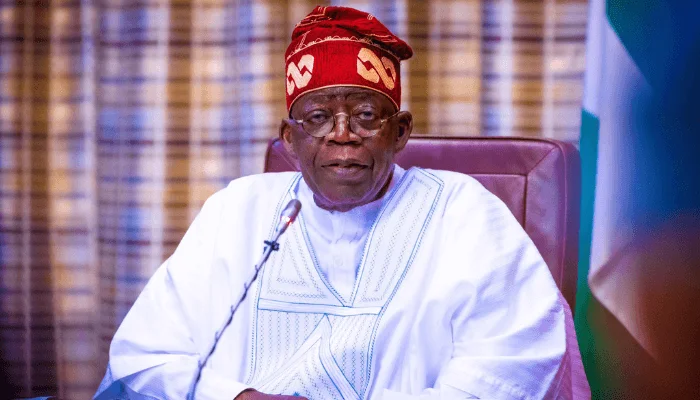
President Bola Tinubu marked his second year in office with a comprehensive reflection on his administration’s journey so far, claiming significant progress in security, economic reforms, and governance.
He highlighted a sharp rise in Nigeria’s external reserves from $4 billion in 2023 to over $23 billion by the end of 2024 as a major achievement.
Tinubu defended controversial decisions like the removal of fuel subsidies and the unification of the foreign exchange market, stating that they were necessary to prevent economic collapse and to secure the country’s fiscal future.
In his mid-term address, Tinubu presented himself as a leader who inherited a troubled economy and took bold, sometimes painful steps to stabilize the nation.
The president maintained that the elimination of fuel subsidies and the overhaul of the exchange rate system were crucial to unlocking funds for critical development projects and curbing systemic corruption.
He acknowledged the hardships Nigerians have faced due to these reforms but emphasized their long-term benefits, citing improvements in government revenue, declining inflation, and increased investments in sectors like oil and gas, mining, and manufacturing.
READ ALSO: Tinubu Sacks NNPCL Boss Mele Kyari, Dissolves Board
The president pointed to growth in GDP, increased oil production, and improved fiscal performance as signs that his reforms are working.
He noted that inflation had started to ease, and rig counts in the oil sector had quadrupled compared to previous years. According to Tinubu, the country’s debt profile is becoming more sustainable, and the debt service-to-revenue ratio has dropped significantly.
He claimed that these improvements have enabled better salary payments, pension disbursements, and infrastructural investments by sub-national governments.
Tinubu also spoke about major strides in tax reform, asserting that Nigeria’s tax-to-GDP ratio had grown from 10% to over 13.5% within a year. He said the administration had streamlined tax processes, eliminated multiple taxation for small businesses, and introduced tax exemptions on essential goods and services.
A Tax Ombudsman is being set up to protect small and vulnerable taxpayers. These measures, he said, are not only boosting revenue but also creating a more inclusive and growth-oriented economy.
Turning to social sectors, Tinubu noted efforts to strengthen healthcare and education. Over 1,000 primary healthcare centres have been revitalized, and thousands more are being upgraded.
New cancer treatment centres are being established, and dialysis services are now free or subsidized in public hospitals. Maternal health has also been prioritized, with thousands of women benefiting from free cesarean sections under a presidential initiative. Health insurance coverage has reportedly expanded to 20 million people from 16 million in two years.
He celebrated investments in agriculture, infrastructure, and energy, saying these sectors are at the heart of his Renewed Hope Agenda. Roads across the country are being rehabilitated or newly constructed, including major expressways and coastal highways.
In energy, efforts are being made to upgrade transmission infrastructure and promote off-grid solar solutions. The administration is also supporting local food production with mechanized farming tools, fertilizers, and policies aimed at stabilizing food prices.
On security, Tinubu said the government had intensified intelligence-driven operations and improved inter-agency collaboration. He praised the military and security personnel for reclaiming areas previously overrun by bandits, especially in the North-West, and said this had allowed farmers to return to their land.
The president acknowledged ongoing challenges but assured Nigerians of his administration’s commitment to securing lives and property.
READ ALSO: JUST IN: FG Declares Tinubu International Airport, Minna Alternative To Abuja Airport
He also touched on youth empowerment, technology, and innovation, spotlighting the work of agencies like NASENI, which he credited with creating jobs and driving industrialization through initiatives like electric vehicle assembly and drone training for young women.
He spoke of efforts to integrate the diaspora through financial instruments and incentives to invest back home.
Opposition Parties React
Despite these claims, opposition parties strongly disagreed with Tinubu’s self-assessment. The Peoples Democratic Party (PDP), Labour Party (LP), and the Coalition of United Political Parties (CUPP) all described his two years in office as a period marked by worsening economic conditions, increased insecurity, and erosion of democratic values.
The PDP accused the president of exacerbating national hardships and demanded that he apologize to Nigerians and prepare to step down. The LP argued that the administration had failed to manage the economy effectively and suggested that a Labour Party government would have performed better.
CUPP was even more critical, calling Tinubu’s administration the worst in Nigeria’s history, citing mass unemployment, inflation, insecurity, and the collapse of public services.
Nevertheless, the ruling All Progressives Congress (APC) defended the president’s record, stating that the reforms were difficult but necessary. The party expressed confidence that the second half of Tinubu’s tenure would bring more visible benefits as the foundations laid in the past two years begin to yield results.
Tinubu, who came into office on May 29, 2023, after winning the presidential election, remains a deeply polarizing figure. While his supporters see him as a bold reformer navigating a challenging landscape, his critics argue that his policies have deepened the suffering of ordinary Nigerians.
As he enters the second half of his term, the nation remains divided over whether his vision of renewed hope is being realized or merely promised.