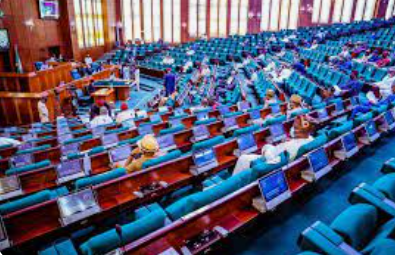
The House of Representatives has halted the Central Bank of Nigeria’s (CBN) proposed mass retirement of over 1,000 staff, citing concerns over transparency and legality. The lawmakers also launched an investigation into the ₦50 billion payoff scheme linked to the exercise.
The decision followed the adoption of a motion of urgent public importance sponsored by Kama Nkemkama (LP, Ebonyi) during Tuesday’s plenary session.
Nkemkama emphasized the need to protect the rights of the affected staff and ensure adherence to Nigerian labor laws.
Lawmakers expressed skepticism about the retirement criteria, questioning the transparency of the process and whether public funds could be misused.
READ ALSO: Gumi Backs Tinubu’s Tax Reform Bills Amid Northern Criticism
They raised alarms about the potential socio-economic impact of the move, particularly on the financial sector and the broader economy.
The House resolved to set up an ad hoc committee to investigate the matter thoroughly. The committee will evaluate the implications of the retirement plan and ensure compliance with labour laws and fair employment practices.
The Federal Ministry of Labour and Employment has been directed to oversee the situation, safeguarding the rights of the affected staff under existing labor regulations. The ministry is expected to engage with the CBN to ensure a fair and legal resolution.
The suspension underscores the House’s commitment to maintaining accountability and protecting workers’ rights. “This is not just about the individuals affected but also about ensuring that public institutions act within the boundaries of transparency, fairness, and legality,” a lawmaker noted during the session.
READ ALSO: Emefiele Linked To Seized 753-Duplex Estate In Abuja
The intervention comes amid heightened scrutiny of the CBN following recent leadership changes and policy decisions under the administration of President Bola Tinubu.
The House’s move signals a determination to address potential irregularities and uphold labor and financial sector integrity. Further developments are anticipated as the ad hoc committee begins its investigation.