





The Federal Government, civil society organisations, traditional rulers and development partners have called for stronger protection of the cultural identity, heritage and rights of Abuja Original Inhabitants amid the rapid expansion of the Federal Capital.
The call was made on Monday at the 2026 United Nations World Indigenous Peoples Day celebration held at the University of Abuja and organised by the Resource Centre for Human Rights and Civic Education (CHRICED) in partnership with the University of Abuja and Abuja Original Inhabitant Organisations.
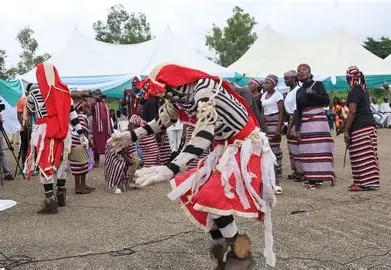
The event brought together hundreds of scholars, traditional rulers, development partners, government representatives and community members, with cultural troupes from the nine indigenous tribes of the FCT showcasing traditional attire, artefacts, music, dance, arts and crafts.
In his opening remarks, the Executive Director of CHRICED, Comrade Ibrahim M. Zikirullahi, warned that Abuja’s transformation into a modern capital must not come at the expense of the identity of its Original Inhabitants.
“As Abuja continues to evolve into a modern capital, the identity and heritage of its Original Inhabitants must not be erased,” Zikirullahi said.
He said the theme of the celebration, “Celebrating Indigenous Midwives: Preserving Abuja Original Inhabitants Identity in a Changing World,” recognised the role of indigenous women whose traditional knowledge has helped protect mothers, welcome children and preserve cultural practices across generations.
Zikirullahi also announced plans for the Abuja Original Inhabitants Heritage Centre, saying construction was expected to commence soon. He said the centre would provide a dedicated space for preserving indigenous history, protecting cultural memory and promoting research.
READ ALSO: Experts Seek Recognition, Training for Indigenous Midwives As CHRICED Hosts X Space
The CHRICED boss called for greater protection of the languages, customs, land rights and cultural expressions of Abuja Original Inhabitants, stressing that development must not result in the loss of their identity.
Representing the Minister of Art, Culture, Tourism and the Creative Economy, Barrister Hannatu Musa Musawa, the Director of Cultural Industries and Heritage, Princess Nwafor Orizu Ginika, reaffirmed the Federal Government’s commitment to preserving the heritage of the FCT’s Original Inhabitants.
She described the communities as custodians of Abuja’s history, traditions, languages, arts and oral heritage, saying their cultural practices remained an important part of Nigeria’s identity.
“Culture is not merely entertainment; it is identity, dignity, economic opportunity and soft power,” she said, adding that indigenous music, dance, storytelling and crafts could strengthen national unity and create opportunities in cultural tourism and the creative economy.
The Vice-Chancellor of the University of Abuja, Prof. Hakeem Fawehinmi, represented by the Director of Academic Planning, Prof. Otoki Alanana, said the celebration provided an opportunity to promote indigenous rights and recognise the contribution of indigenous peoples to environmental protection and cultural diversity.
He said concerted efforts were required to ensure that indigenous cultures and traditions were not lost as society continued to change.
“The key issue is to raise awareness and protect the rights of indigenous people,” Fawehinmi said.
READ ALSO: CHRICED, UniAbuja Set to Honour Abuja’s Indigenous Midwives, Cultural Heritage
In his keynote address, Professor Matthew Sunday Dada, the Director of Center for Indigenous Studies and Community Development, University of Abuja, called for stronger efforts to preserve the identity, culture, languages and ancestral heritage of Abuja Original Inhabitants amid rapid urbanisation and development.
Prof. Dada identified land displacement, cultural assimilation, declining indigenous languages, environmental degradation and limited socio-economic and political representation as major challenges facing indigenous communities.
He urged traditional rulers, youths, government, educational institutions and Original Inhabitants to work together by documenting history, promoting indigenous languages, protecting ancestral lands and using education and technology to preserve cultural knowledge for future generations.
Also speaking, the Africa Director of the MacArthur Foundation, Dr Kole Shettima, represented by the foundation’s Deputy Director, Amina Salihu, said the organisation remained committed to advancing the rights of marginalised communities after supporting initiatives in Nigeria for 32 years.
Shettima described indigenous peoples as custodians of ancestral knowledge and community well-being, while warning that structural barriers and discrimination continued to undermine indigenous knowledge systems.
“Indigenous knowledge systems must be valued and rights protected,” he said, describing the celebration as an opportunity to honour heritage as a pathway to justice.
The Agabe of Gwargwada, His Royal Highness Hussein Agabi, commended the MacArthur Foundation for supporting indigenous communities and called for greater attention to the annual celebration.
Agabi urged political office holders, including area council chairmen, senators and members of the House of Representatives, to participate more actively in subsequent editions, saying the foundation’s support had increased visibility for the concerns of FCT Original Inhabitants.
Speaking on indigenous midwifery, the Queen of Abaji Chiefdom and President of the Association of Wives of FCT Traditional Rulers, Hauwa Ibrahim Adamu, said indigenous midwives remained important custodians of traditional knowledge and cultural heritage.
Adamu, a retired professional nurse and midwife, said many indigenous women continued to rely on community midwives before accessing formal healthcare services.
She called for training, provision of equipment, proper referral systems and documentation of indigenous midwifery practices to strengthen collaboration between traditional and formal healthcare providers.
The Queen of Abaji also urged the FCT Government to include indigenous midwives in maternal health policies, while encouraging the University of Abuja and other institutions to research and preserve their knowledge.
The celebration featured cultural performances, traditional attire, indigenous arts and crafts exhibitions, as well as goodwill messages from partners and stakeholders who pledged continued support for the rights, welfare and cultural preservation of Abuja Original Inhabitants.


