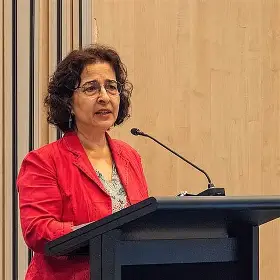
The United Nations Special Rapporteur on Freedom of Religion or Belief, Nazila Ghanea, has called on Nigeria to domesticate the Statute of the International Criminal Court to strengthen accountability and justice for victims of terrorism, banditry, and other grave crimes.
Ghanea made the call on Friday in Abuja while presenting the outcome of her fact-finding mission to Kano and Plateau states, where she met with government officials, religious leaders, civil society organisations, victims, and other stakeholders.
She said stronger legal mechanisms were needed to address impunity and ensure justice for victims of insecurity across the country.
According to her, “The domestication of the Rome Statute can strengthen accountability and provide additional avenues for justice for victims of serious crimes. Accountability remains an important component in addressing impunity.”
The UN envoy described Nigeria’s security challenges as complex and multifaceted, stressing that military responses alone would not be sufficient to tackle the crisis.
READ ALSO: Boko Haram Terrorists Set Schools Ablaze in Fresh Chibok Attack
She urged authorities to uphold human rights, protect freedom of religion and belief, and ensure that perpetrators of violence are brought to justice.
“Freedom of religion or belief is a human rights issue. No religion should be used to justify violence, discrimination, or attacks against innocent people,” she said.
The briefing was organised in collaboration with the National Human Rights Commission.
Also speaking, the Executive Director of the Resource Centre for Human Rights and Civic Education, Dr. Ibrahim Zikirullahi, expressed concern over weak accountability mechanisms and governance failures, which he said continue to fuel insecurity across the country.
He noted that victims of violent attacks often struggle to obtain justice, warning that the absence of accountability encourages further violations.
Responding, Ghanea called for a review of aspects of Nigeria’s constitutional framework and addressed allegations of genocide in parts of the country.
She, however, maintained that her assessment would be based on evidence gathered during her visit and consultations with stakeholders.
The UN Special Rapporteur assured Nigerians that concerns raised during her mission would be reflected in her report to the United Nations in March 2027.
“I have listened carefully to victims, community leaders, religious groups, government officials, and civil society actors. Their concerns will be accurately reflected in my report to the United Nations,” she said.
She expressed hope that her findings would contribute to greater international support for justice, accountability, human rights protection, and lasting peace in Nigeria.